LM-79 Goniophotometer Brathadóir Bogtha (Scáthán Cineál C)
LSG-6000
Luminaire Goniophotometer Rothlú Ard-Beachtais
LSG-1890B
Goniospectroradiometer Luminaire Rothlú Ard-Beachtais
LSG-1890BCCD

Goniophotometer le haghaidh Lampaí Feithicleach agus Comhartha
LSG-1950
Goniophotometer do Lampaí Comharthaí Tráchta (Samhail Eacnamaíoch)
LSG-1950S
Gléas Amhairc Aláraim Dóiteáin VAD Goniophotometer
LSG-1930
Goniophotometer le haghaidh Soilsiú Aerpháirce
LSG-1940
Goniophotometer Dlúth
LSG-1200A
Goniophotometer faoi stiúir
LSG-1100
Goniophotometer in aice le Brathadóir Gluaisteán Allamuigh
LSG-1900B
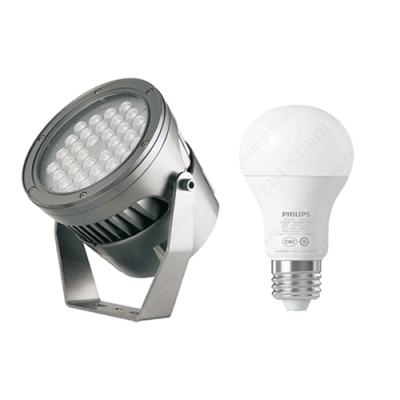 Soilse agus Réitigh Tástála Luminaire
 LM-79 agus LM-80 Réitigh Tástála
 Réitigh faoi Thástáil Tiomána faoi stiúir
 Réitigh Tástála Fearais Teaghlaigh
 Réitigh Tástáil Soghluaiste agus Líonra
 Réitigh Tástála Leictreonaic Feithicleach
 Réitigh Tástála Fuaime-Físe agus TF
 Réitigh Tástála Cábla agus Sreanga
 Réitigh Tástála Plocóidí agus Soicéid
 Réitigh Tástála Lasc Cumhachta
 Réitigh Tástála Claochladáin
 Réitigh Tástála Bréagán Leictreacha
 Réitigh Tástála Méadar Fuinnimh
 Réitigh Tástála Uirlisí Mótar-Oibrithe
Roghnaigh eagraíocht
chun caighdeáin a bhrabhsáil
Achomaireacht:
During the operation of electrical and electronic equipment, faults such as circuit short‑circuit and aging overheating of components can easily generate tiny flames, which may ignite surrounding insulating plastics, housing materials and become a major cause of electrical fires. The needle flame test apparatus evaluates the flame‑resistance performance of product components and insulating materials by simulating tiny flames induced by such internal faults. It serves as critical testing equipment for safety certification of electrical and electronic products. Taking the LISUN ZY‑3 needle flame tester as the research object, this paper introduces the working principle, structural features, key technical parameters, test procedures, evaluation criteria and practical application scenarios of the needle flame test apparatus. It provides technical references for fire‑safety testing of electronic products, flame‑retardant material research and development, as well as product market access.
Réamhrá
A large number of electrical fire accidents originate from internal equipment ignition. Different from open external flames, many fire sources are merely tiny flames formed by short‑circuit or overheating of electronic components. Such flames feature small volume and concentrated energy. They tend to ignite adjacent plastic insulators, PCB substrates and wire harness sheaths, and further spread to severe fire accidents. Conventional combustion tests are mostly designed for large‑scale open‑flame scenarios and cannot reproduce the real working conditions of micro fire sources inside equipment. The gaireas tástála lasair snáthaide is a testing device specially developed for such working conditions. It complies with Chinese standard GB/T 5169.5‑2020 and international standard IEC 60695‑11‑5:2016. It is used to simulate tiny flames generated by internal equipment faults and assess the flame resistance of materials and complete‑machine components under small‑flame ignition conditions, as well as the risk of flame propagation. It is widely adopted in household appliances, information‑technology equipment, lighting products, automotive electronics, third‑party testing laboratories and research institutes. As a mature commercial needle flame test apparatus, LISUN ZY‑3 needle flame tester strictly complies with standard requirements, realizing accurate flame control, automatic timing and data recording. It can complete R&D tests, factory inspection and certification tests.
1 Working Principle of Needle Flame Test Apparatus
The core component of the needle flame test apparatus is a standard needle‑shaped burner fueled by butane gas with purity ≥95 %, which generates a standard test flame with a height of 12 mm±1 mm. The flame is applied to the specimen surface at a 45° inclined angle to simulate the impact of tiny flames caused by component short‑circuit and overheating on component surfaces. During testing, the application time, after‑flame time and glowing time of the specimen after flame removal are recorded. Meanwhile, observations are made to check whether molten drips ignite the underlying silk paper and pinewood board. Its core objective is not to measure material performance under large‑scale fire exposure, but to investigate whether surrounding materials will be ignited when local micro fire sources occur inside equipment, whether combustion can self‑extinguish after ignition, and whether flaming drips will cause fire spread. Based on above observations, the fire‑safety level of products can be evaluated.
A complete needle flame test apparatus consists of a closed test chamber, needle‑shaped burner, gas‑path control system, thermocouple temperature‑verification assembly, timing‑acquisition module and human‑machine interaction unit. The burner supports angle adjustment: vertical position for calibration and 45° inclined position for formal testing. The thermocouple verifies the thermal output of the flame. The standard requirement specifies that the flame shall rise from 100 ℃±2 ℃ to 700 ℃±3 ℃ within 23.5 s±1 s. This ensures consistent thermal output for each test and guarantees repeatable and comparable test results across different batches and laboratories.
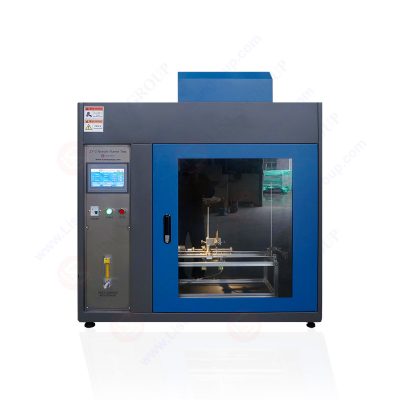
ZY-3 Tástáil Lasair Snáthaide
2 Príomhpharaiméadair LISUN ZY‑3 Needle Flame Test Apparatus
LISUN ZY‑3 needle flame test apparatus has two versions: ZY‑3 with enclosed chamber and ZY‑3S without chamber. The model with closed chamber isolates external air interference and stabilizes test environment, suitable for standard laboratory tests. The chamber‑free version features compact dimensions and fits rapid screening on production lines. Key technical parameters are shown in Table 1.
Table 1 Key Technical Parameters of ZY‑3 and ZY‑3S Needle Flame Test Apparatus
| Mír Paraiméadar | ZY‑3 (with chamber) | ZY‑3S (without chamber) |
| Uillinn an Dóire | Adjustable; 45° inclination for test, vertical for calibration | Adjustable; 45° inclination for test, vertical for calibration |
| Am Iarratais Lasair | 0~999.9 s (±0.1 s), default 30 s, customizable | 0~999.9 s (±0.1 s), default 30 s, customizable |
| After‑flame Time Recording | 0~999.9 s (±0.1 s), auto‑recording, manual pause available | 0~999.9 s (±0.1 s), auto‑recording, manual pause available |
| Airde Caighdeánach Lasrach | 12 mm±1 mm | 12 mm±1 mm |
| Gás Tástála | ≥95 % butane; electronic gas flowmeter optional | ≥95 % butane; electronic gas flowmeter optional |
| Raon Tomhais Teochta | 0~1000 ℃ | 0~1000 ℃ |
| Flame Temperature Rise Specification | 100 ℃±2 ℃ to 700 ℃±3 ℃ within 23.5 s±1 s | 100 ℃±2 ℃ to 700 ℃±3 ℃ within 23.5 s±1 s |
| Temperature‑measuring Thermocouple | Φ0.5 mm K‑type thermocouple | Φ0.5 mm K‑type thermocouple |
| Oibríocht Mód | LCD touch screen + indicator light + remote control | LCD touch screen + indicator light + remote control |
| Meáchan Comhlán | 180 kg | 40 kg |
As shown in Table 1, both versions share identical core combustion, timing and temperature indicators. Differences lie in chamber configuration and overall weight. Users can select models according to test environments and application scenarios. The whole unit adopts high‑temperature sprayed steel structure with high temperature resistance and corrosion resistance for long‑term repeated high‑temperature tests. It supports single or multiple continuous flame application to satisfy special continuous combustion test requirements of IEC 62368‑1.
3 Standard Test Procedures and Result Judgement for Needle Flame Test Apparatus
3.1 Nósanna Imeachta Tástála
1. Specimen pre‑treatment and clamping: Fix the sample on fixture, and select the position most likely to be exposed to fault flames inside the product as the flame‑application point.
2. Equipment calibration: Ignite the burner, adjust flame height to 12 mm±1 mm. Verify flame temperature‑rise rate with copper block and thermocouple to confirm compliance with standard specifications.
3. Set test parameters. The standard recommended flame‑application time is generally 30 s. Rotate burner to 45° position and bring flame tip into contact with specimen.
4. Upon completion of preset flame‑application duration, the burner retracts automatically. The needle flame test apparatus starts to record after‑flame time and glowing duration automatically.
5. Observe specimen combustion behavior throughout the test, monitor molten drips, and check whether underlying silk paper and white pinewood board are ignited or carbonized.
6. Terminate test after complete extinction of specimen without glowing phenomenon. Export test data and document observed phenomena.
3.2 Pass‑Fail Criteria
According to GB/T 5169.5‑2020, a specimen passes the needle flame test if either of the following conditions is met:
(1) No ignition or glowing occurs on the specimen under flame exposure; the underlying silk paper is not ignited and white pinewood board shows no carbonization.
(2) After flame removal, total duration of flame and glowing on the specimen is less than 30 s, and drips do not ignite or carbonize the underlay.
Prolonged specimen combustion or ignition of the underlay by molten drips indicates fire‑spread risks under internal tiny‑flame fault conditions. Product redesign is required, including structural modification or adoption of insulating materials with higher flame‑retardant grade.
4 Application Scenarios of Needle Flame Test Apparatus
The needle flame test apparatus is widely used in electrical‑electronic, information‑technology, lighting, automotive‑electronics and material‑R&D industries.
First, in electrical‑appliance industry: insulating bases of relays, contactors and circuit‑breakers, plastic panels of switches and sockets, and cable insulation layers need needle flame test apparatus to simulate micro‑flames caused by contact arc and overload faults. It verifies anti‑ignition performance of insulating parts to satisfy safety requirements such as GB/T 2099.1 and guarantee low‑voltage electrical safety.
Second, for information‑technology and audio‑video equipment: routers, printers, power adapters, charger housings and insulating components surrounding power modules are tested for fire risks induced by chip short‑circuit and overheating. Complying with GB/T 4943.1‑2022 and IEC 62368‑1:2023, needle flame test constitutes an important certification item for consumer electronics.
Third, in lighting industry: plastic internal parts of LED driver housings, lamp holders, ballasts and outdoor floodlights are tested for flame resistance against micro‑flames from faulty internal components, complying with GB 7000.1-2015.
Fourth, automotive electronics and new‑energy vehicles: vehicle‑mounted central‑control interior parts, wire‑harness insulation, charging‑pile insulators and BMS housings are tested to simulate micro‑flames caused by charging overload and circuit faults, so as to evaluate fire‑safety performance of automotive components in accordance with ISO 6722‑1 and GB/T 2408‑2021.
Fifth, material research and testing: modified engineering plastics such as ABS, PC, PA, epoxy glass‑cloth boards and polyimide films are tested with needle flame test apparatus to obtain ignition and after‑flame data. The data support flame‑retardant formula development and material‑grade evaluation, providing quantitative test basis for new‑material iteration.
5 Conclúid
An gaireas tástála lasair snáthaide is key testing instrument for reproducing tiny‑flame scenarios caused by short‑circuit and component overheating inside electronic equipment. It makes up for the limitation of large‑flame combustion tests which cannot simulate micro fire sources inside equipment. Test results directly reflect fire‑safety performance of components and insulating materials under real‑world fault conditions. LISUN ZY‑3 needle flame test apparatus fully complies with domestic GB/T 5169.5‑2020 and international IEC 60695‑11‑5:2016 standards. Its flame temperature, flame height and timing accuracy are well‑controlled. Equipped with dual operation modes of touch screen and remote control, it balances testing accuracy and operational safety, meeting diversified demands of enterprise quality‑control departments, third‑party laboratories and research institutions.
Electrical safety is a mandatory requirement for product market access. Enterprises shall make full use of the needle flame test apparatus to conduct needle flame tests at the product‑R&D stage, identify component fire hazards in advance, optimize material selection and structural design, reduce electrical fire risks from the source and ensure product safety.
Clibeanna:ZY-3Ní thabharfar do sheoladh r-phoist a fhoilsiú. Réimsí riachtanacha atá marcáilte *

 english
 中文简体
中文简体 Русский
 Español
 Português
 Türkçe
 العربية
 Deutsch
 Polski
 Italiano
 Français
 한국어
한국어 ไทย
ไทย Tiếng Việt
 日本語
日本語